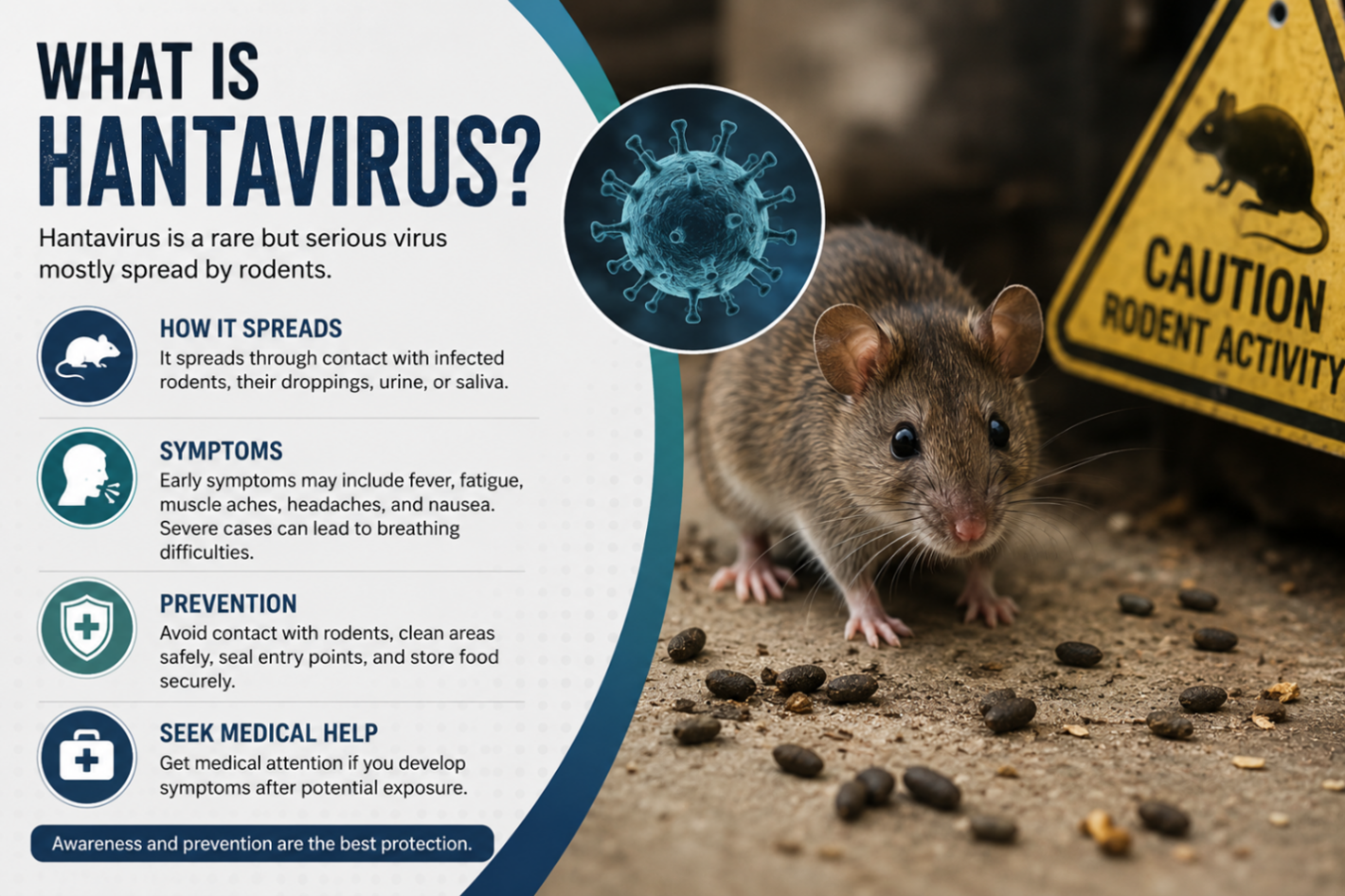
In recent months, online searches for “what is hantavirus” have increased as more people come across news reports and public health discussions about the virus. Understandably, this has raised questions about how hantavirus spreads, what symptoms people should look out for, and whether it is something the general public should worry about.
Although hantavirus infections are considered uncommon in many parts of the world, health experts continue to monitor cases carefully because some strains can lead to serious illness. Understanding the basics of hantavirus can help people stay informed without unnecessary panic.
What Is Hantavirus?
According to the Centers for Disease Control and Prevention (CDC), hantavirus refers to a group of viruses mainly carried by rodents and spread through exposure to contaminated droppings, urine, or saliva.
Different types of hantaviruses exist in different regions. Some are linked to respiratory illnesses, while others affect the kidneys. According to infectious disease experts, the virus is most commonly associated with wild rodents rather than domestic pets.
The virus has been identified in several parts of the world, including North America, South America, Europe, and Asia. However, the types of rodents involved and the illnesses caused can vary depending on the location.
Most people who come into contact with rodents will never develop hantavirus infection. Even so, awareness is important because early symptoms may initially appear mild or similar to common viral illnesses.
How Does Hantavirus Spread?
One of the main reasons people search “what is hantavirus” is concern about how the virus spreads from animals to humans.
The most common form of transmission happens when virus particles become airborne and are inhaled. This can occur while cleaning or disturbing areas contaminated with infected rodent droppings or urine.
For example, someone cleaning an old shed, attic, garage, storage room, or unused cabin may unknowingly stir contaminated particles into the air. Breathing in these particles can increase the risk of infection.
Other possible ways hantavirus may spread include:
- Touching contaminated surfaces and then touching the mouth or nose
- Handling rodent nests or droppings without protection
- Consuming food contaminated by rodents
- Rodent bites, although this is considered less common
Experts note that human to human transmission is extremely rare for most hantavirus strains.
Unlike some respiratory viruses, hantavirus is not typically spread through casual social contact, which is an important distinction for public understanding.
Common Symptoms of Hantavirus
One challenge with hantavirus is that the early symptoms can look similar to flu or other viral illnesses.
Symptoms often begin with general signs such as:
- Fever
- Fatigue
- Muscle aches
- Chills
- Headaches
- Nausea
- Vomiting
- Abdominal pain
Some people may also experience dizziness or back pain during the early stage of infection.
As the illness progresses, symptoms may become more serious. In certain cases, patients can develop coughing, shortness of breath, and chest tightness as fluid builds in the lungs.
This severe respiratory form is often referred to as Hantavirus Pulmonary Syndrome (HPS), which requires urgent medical care.
It is important to remember that many common illnesses can cause similar symptoms. Having flu-like symptoms alone does not mean someone has hantavirus. Exposure history is a major factor doctors consider when evaluating possible cases.
How Soon Do Symptoms Appear?
Symptoms do not usually appear immediately after exposure.
Health experts suggest that symptoms may develop anywhere from one to eight weeks after contact with infected rodent material. Because of this delay, people may not immediately connect their symptoms to earlier exposure.
Someone who recently cleaned a rodent-infested storage area or stayed in a cabin with visible rodent activity should mention this to a healthcare professional if symptoms develop later.
Who Is More at Risk?
Hantavirus infection can affect anyone exposed to contaminated environments, but certain situations may increase risk levels.
People who may face higher exposure include:
- Farmers and agricultural workers
- Construction workers
- Pest control workers
- Campers and hikers
- People cleaning unused buildings
- Individuals living in areas with high rodent populations
Risk is generally linked to environmental exposure rather than age, gender, or general health status.
For example, entering closed buildings that have been left unused for long periods may increase the chance of encountering contaminated dust.
Can Hantavirus Be Prevented?
Prevention mainly focuses on limiting exposure to rodents and contaminated areas.
Health authorities recommend several practical steps to reduce risk:
Keep Rodents Out of Buildings
Small holes, cracks, and gaps around buildings should be sealed to prevent rodents from entering homes, sheds, or storage spaces.
Food should also be stored in sealed containers to avoid attracting rodents.
Be Careful When Cleaning
One of the biggest mistakes people make is sweeping or vacuuming rodent droppings directly. This can release contaminated particles into the air.
Instead, experts recommend:
- Ventilating the area first
- Wearing gloves and a mask if appropriate
- Spraying contaminated areas with disinfectant
- Using paper towels for cleanup rather than dry sweeping
These precautions help reduce airborne exposure.
Reduce Outdoor Exposure Risks
Campers and hikers should avoid sleeping near rodent nests or areas with visible droppings. Food waste should be managed carefully in outdoor environments.
Why Is Hantavirus Being Discussed More Often?
Public interest in hantavirus tends to increase whenever media reports highlight cases or experts discuss emerging infectious diseases.
Recently, infectious disease specialists have been responding to growing public questions about hantavirus and clarifying how the virus spreads and who may be affected. Experts continue to emphasise that awareness is important, but widespread fear is not necessary.
Most infections remain relatively uncommon, especially compared to more widespread respiratory viruses.
Still, public education matters because early recognition and proper medical attention can improve outcomes.
When Should Someone Seek Medical Advice?
Medical advice should be considered if someone develops flu-like symptoms after possible rodent exposure.
This is especially important if symptoms include:
- Difficulty breathing
- Chest pain or tightness
- Severe fatigue
- Persistent fever
- Worsening cough
Doctors may ask about recent environmental exposure, travel history, or rodent contact when assessing symptoms.
Early medical attention can be important in more serious cases.
Final Thoughts
Many people searching “what is hantavirus” are simply looking for reliable information after seeing concerning headlines online. While hantavirus can cause serious illness in some cases, understanding the actual risks helps separate facts from fear.
The virus is primarily linked to exposure to infected rodents and contaminated environments rather than everyday human interaction. Knowing how hantavirus spreads, recognising possible symptoms, and following practical prevention steps can help lower the risk of infection.
Staying informed through trusted medical and public health sources remains one of the best ways to respond calmly and responsibly when discussions about emerging viruses appear in the news.