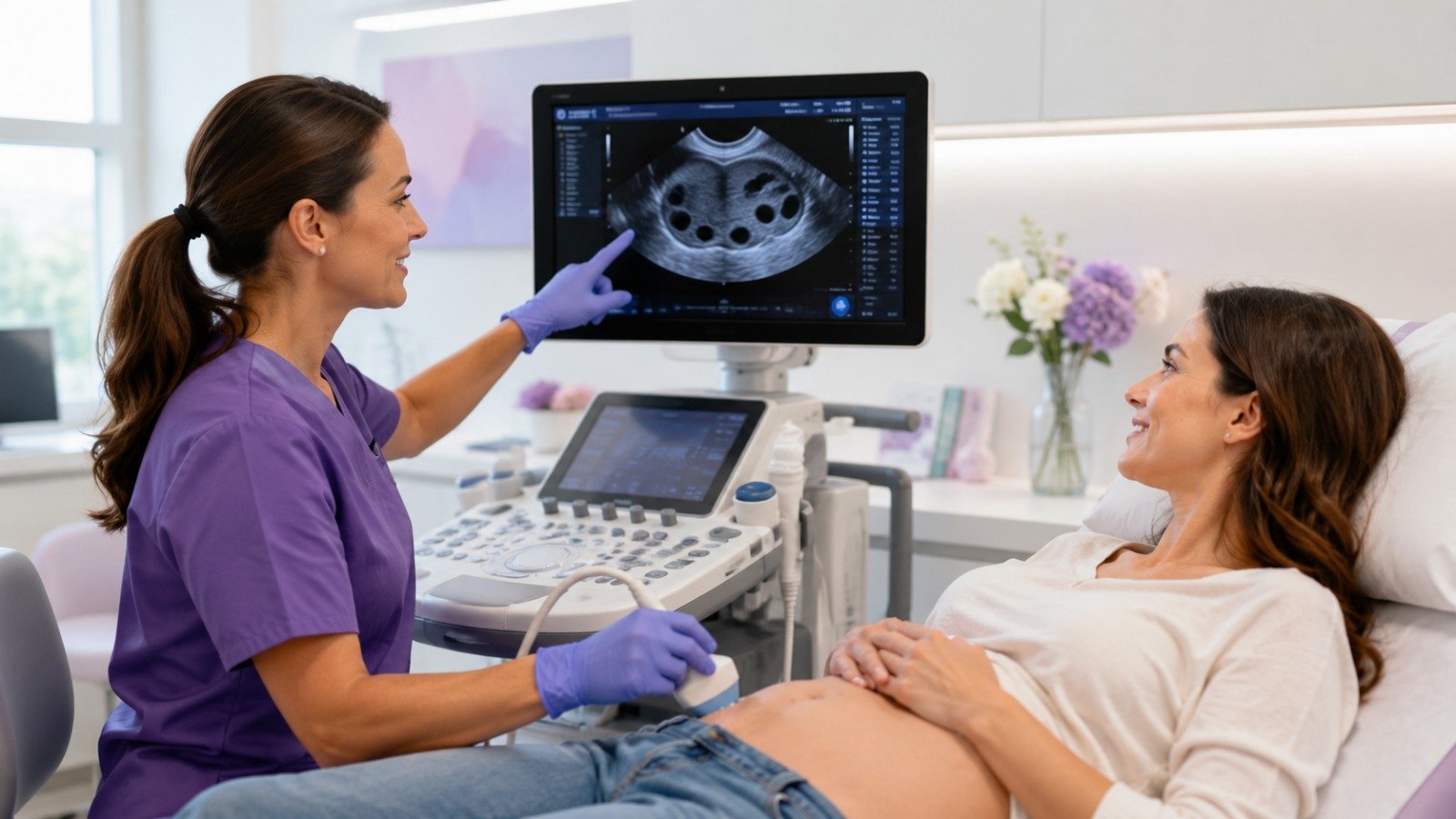
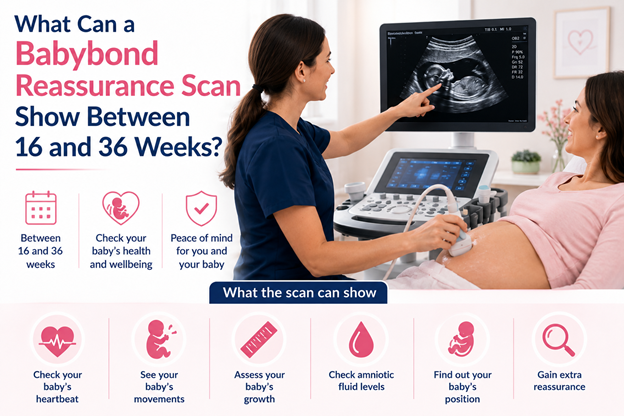
Is my baby growing as expected? Has my baby moved into the right position? Should I be worried if my bump seems smaller or larger than other people’s?
These are common questions many expectant parents ask throughout pregnancy. While routine maternity appointments provide important checks, it is natural to want additional reassurance about your baby’s growth and development, especially as pregnancy progresses.
A pregnancy growth scan can provide valuable information about how your baby is developing, whether growth appears appropriate for your stage of pregnancy, and where your baby is positioned in the womb.
In this guide, we explain how reassurance scans can help monitor your baby’s growth and position, what they can check, and when additional monitoring may be recommended.
Why Baby Growth Monitoring Matters
Monitoring your baby’s growth is an important part of pregnancy care.
Throughout pregnancy, your baby goes through rapid changes in size, weight, and development. While every baby grows at their own pace, healthcare professionals use growth assessments to ensure development is progressing as expected.
Regular monitoring can help identify potential concerns early and provide reassurance when everything appears normal.
Growth monitoring may help assess:
- Whether your baby is developing appropriately for your stage of pregnancy
- How growth compares with expected milestones
- Whether additional monitoring may be beneficial
- Your baby’s overall wellbeing
For many parents, knowing that their baby is growing well can provide significant peace of mind.
What Is a Pregnancy Growth Scan?
A pregnancy growth scan is an ultrasound examination used to assess your baby’s size and development during pregnancy.
The scan uses ultrasound technology to take measurements of different parts of your baby’s body. These measurements are then compared with expected growth ranges for your stage of pregnancy.
A growth scan can also provide information about:
- Your baby’s position
- Amniotic fluid levels
- Placental location
- General wellbeing
Growth scans are commonly performed during the second and third trimesters when your baby is large enough for detailed measurements.
Can a Reassurance Scan Measure Baby’s Growth?
Yes, a reassurance scan may provide an overview of your baby’s growth and development.
During the scan, the sonographer may assess measurements such as:
- Head circumference
- Abdominal circumference
- Femur length
- Estimated fetal weight
These measurements help determine whether your baby’s growth appears consistent with your stage of pregnancy.
A reassurance scan is not intended to replace specialist growth monitoring when medically required, but it can provide useful information and reassurance for many expectant parents.
How Is Baby’s Position Checked?
One of the benefits of a pregnancy growth scan is the ability to see your baby’s position within the womb.
Using ultrasound imaging, the sonographer can identify whether your baby is:
- Head down (cephalic position)
- Bottom down (breech position)
- Lying sideways (transverse position)
- Still changing position
Knowing your baby’s position can be particularly helpful during the later stages of pregnancy as you prepare for labour and birth.
Why Does Baby’s Position Change During Pregnancy?
It is completely normal for babies to move and change position throughout pregnancy.
Earlier in pregnancy, your baby has plenty of space to move around and may frequently change positions.
As pregnancy progresses and space becomes more limited, babies often settle into a head-down position in preparation for birth.
However, some babies continue to change position until the final weeks of pregnancy.
This is why a single scan provides a snapshot of your baby’s position at that specific time rather than predicting exactly where they will remain.
Can a Reassurance Scan Check Amniotic Fluid Levels?
Yes.
A reassurance scan can assess the amount of amniotic fluid surrounding your baby.
Amniotic fluid plays an important role in:
- Supporting growth and development
- Protecting your baby
- Allowing movement within the womb
The sonographer can perform a basic assessment of fluid levels as part of the scan.
Monitoring amniotic fluid can provide additional information about your baby’s wellbeing and development.
What Happens If a Baby Is Measuring Smaller or Larger Than Expected?
Finding that a baby is measuring slightly ahead or behind average does not automatically mean there is a problem.
Many healthy babies naturally fall outside average measurements.
If the scan suggests that growth is significantly smaller or larger than expected, further monitoring may be recommended.
Depending on the findings, your healthcare provider may suggest:
- Additional growth scans
- Follow-up appointments
- Further assessment by your maternity team
The purpose of monitoring is to gather more information and ensure both mother and baby receive appropriate care.
When Are Growth Scans Usually Recommended?
Growth scans may be recommended for a variety of reasons.
Common situations include:
- Concerns about baby’s growth
- Changes in fundal height measurements
- Previous pregnancy complications
- Certain maternal health conditions
- Multiple pregnancies
- Reduced baby movements
Some parents also choose private scans for additional reassurance between routine appointments.
If you would like to learn more about pregnancy imaging services, you can explore our private ultrasound scan
Who May Benefit From Additional Pregnancy Monitoring?
Additional monitoring may be beneficial for women who:
- Have experienced previous pregnancy complications
- Have high blood pressure
- Have diabetes
- Are carrying twins or multiples
- Have concerns about baby movements
- Have been advised to have closer monitoring by their healthcare provider
Additional monitoring can help identify concerns early and provide reassurance when everything appears to be progressing normally.
What Happens During a Reassurance Scan Appointment?
A reassurance scan appointment is usually simple and comfortable.
During the appointment:
- Your pregnancy details and any concerns will be discussed.
- Ultrasound gel will be applied to your abdomen.
- The sonographer will perform the scan.
- Your baby’s growth, position, and wellbeing will be assessed.
- Findings will be explained during the appointment.
Many parents find the experience reassuring because it provides an opportunity to see their baby and receive professional guidance.
When Should You Contact a Healthcare Professional?
You should contact your midwife or healthcare provider if you experience:
- Reduced baby movements
- Sudden swelling
- Vaginal bleeding
- Persistent abdominal pain
- Concerns about your baby’s wellbeing
If something does not feel right, it is always best to seek advice rather than wait.
Medical Room provides comprehensive pregnancy and women’s health support through our Gynaecology Services
You may also find our related articles helpful:
- Reduced Baby Movements: When Should You Get a Reassurance Scan?
- What Can a Babybond Reassurance Scan Show Between 16 and 36 Weeks?
- Pregnancy Anxiety in the Second Trimester: How Reassurance Scans May Help
Final Thoughts
A pregnancy growth scan can provide valuable information about your baby’s development, position, and overall wellbeing. While every baby grows differently, growth monitoring helps ensure that development is progressing as expected and allows potential concerns to be identified early.
For many parents, a reassurance scan offers peace of mind between routine appointments and provides an opportunity to see their baby, check growth, and understand their baby’s position as pregnancy progresses.
If you would like additional reassurance during your pregnancy, speaking with an experienced healthcare professional can help you make informed decisions about your care.