Do you actually know what is happening inside your own body right now?
Persistent digestive discomfort, abdominal pain, bloating, or unexplainable fatigue are issues we encounter almost every day. We easily brush them off, telling ourselves, “It must be something I ate,” or “I’m just stressed out from a busy week.” But what if these seemingly minor symptoms aren’t just everyday annoyances? What if they are actually an internal ‘Red Alert’ from your body?
When these symptoms linger for months without a clear cause, what is truly triggering them? How can you tell if a serious condition like fatty liver disease or gallstones is quietly developing in your liver, gallbladder, or kidneys? Why do doctors almost always recommend an Abdominal Ultrasound scan when faced with these mysteries, and how exactly does this imaging technology uncover the real story hidden inside your abdomen?
Read on to discover what your body might be trying to tell you, and how a simple scan can provide the answers you need.
What Is an Abdominal Ultrasound?
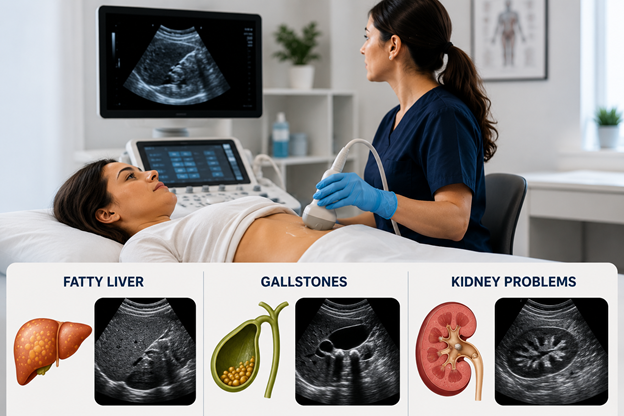
An abdominal ultrasound is a non-invasive imaging scan that uses sound waves to create images of organs inside the abdomen.
Unlike X-rays or CT scans, ultrasound does not use radiation. Instead, a handheld device called a transducer is moved over the skin while sound waves create live images on a screen.
The scan is commonly used to examine:
- The liver
- Gallbladder
- Kidneys
- Pancreas
- Spleen
- Blood vessels
- Surrounding abdominal tissues
Because the scan is painless and widely available, it is often one of the first imaging tests recommended when patients experience abdominal symptoms.
Why Are Ultrasound Scans Commonly Used?
Ultrasound scans are commonly used because they provide real-time images of internal organs quickly and safely.
Healthcare professionals may recommend abdominal ultrasound scans to investigate symptoms such as:
- Stomach pain
- Bloating
- Nausea
- Digestive discomfort
- Unexplained fatigue
- Changes in urination
- Abnormal blood test results
Ultrasound scans are also useful for monitoring certain health conditions over time.
In many cases, scans can help identify problems before symptoms become severe, allowing earlier medical assessment and management.
People looking for diagnostic imaging support may access ultrasound services through the Medical Room.
What Can an Abdominal Ultrasound Detect?
An abdominal ultrasound can help identify a wide range of conditions affecting different organs within the abdomen.
Depending on the symptoms being investigated, the scan may help detect:
- Fatty liver disease
- Gallstones
- Kidney stones
- Kidney swelling
- Liver enlargement
- Cysts
- Fluid build-up
- Certain abdominal masses
- Inflammation affecting abdominal organs
Although ultrasound scans are extremely useful, additional tests may sometimes still be required depending on the findings.
The scan itself helps healthcare professionals gain a clearer understanding of possible causes behind abdominal symptoms.
Signs and Symptoms of Fatty Liver
Fatty liver disease happens when excess fat builds up inside the liver.
In many cases, fatty liver develops gradually and may not cause noticeable symptoms early on. Some people only discover the condition during routine scans or blood tests.
When symptoms do occur, they may include:
- Tiredness
- Discomfort in the upper right abdomen
- Bloating
- Feeling generally unwell
- Difficulty losing weight
Lifestyle factors such as poor diet, obesity, diabetes, and alcohol intake can sometimes increase the risk of fatty liver disease.
Because symptoms can often be mild or absent, abdominal ultrasound scans are commonly used to help detect fatty liver changes.
Common Symptoms of Gallstones
Gallstones are hardened deposits that form inside the gallbladder.
Some people with gallstones experience no symptoms at all, while others may develop sudden pain or digestive discomfort.
Common symptoms may include:
- Sharp pain in the upper abdomen
- Pain after eating fatty meals
- Nausea
- Bloating
- Indigestion
- Pain spreading to the shoulder or back
Gallstone pain may come and go, which can sometimes delay diagnosis.
Ultrasound scans are considered one of the most effective ways to identify gallstones because they allow healthcare professionals to visualise the gallbladder directly.
How Ultrasound Scans Help Detect Kidney Problems
Kidney-related symptoms are not always obvious during the early stages of disease.
Abdominal ultrasound scans may help identify:
- Kidney stones
- Kidney swelling
- Cysts
- Structural abnormalities
- Urinary obstruction
People experiencing kidney-related problems may notice symptoms such as:
- Pain in the side or lower back
- Changes in urination
- Blood in urine
- Frequent urinary infections
- Nausea
Ultrasound imaging helps doctors assess the kidneys safely and quickly without using radiation.
In some cases, scans are also used to monitor existing kidney conditions over time.
When Should You Book an Ultrasound Scan?
People often delay scans because they hope symptoms will improve on their own. However, persistent abdominal symptoms should not always be ignored.
You may wish to consider an abdominal ultrasound if you experience:
- Ongoing stomach pain
- Frequent bloating
- Digestive discomfort
- Pain after eating
- Unexplained nausea
- Changes in urination
- Abnormal blood test results
- Persistent fatigue linked to abdominal symptoms
Ultrasound scans may also be recommended when doctors need to investigate possible causes behind abnormal liver or kidney function tests.
The Medical Room provides diagnostic scan that support patients seeking further investigation for abdominal symptoms.
What Happens During an Abdominal Ultrasound?
Many people feel anxious before medical scans simply because they do not know what to expect.
An abdominal ultrasound is usually straightforward and painless.
During the scan:
- A gel is applied to the abdomen
- The sonographer moves the ultrasound probe across the skin
- Images appear live on a monitor
- Different organs are examined carefully
Patients may sometimes be asked to avoid eating beforehand depending on the area being examined.
The scan itself usually takes a relatively short amount of time and does not involve needles or surgery.
Can Ultrasound Scans Detect Problems Early?
In many cases, yes.
One of the major benefits of abdominal ultrasound imaging is that it may help identify certain conditions before severe symptoms develop.
This can be especially important for conditions such as:
- Fatty liver disease
- Gallstones
- Kidney abnormalities
Early identification may allow patients to:
- Make lifestyle changes earlier
- Receive medical treatment sooner
- Monitor conditions more effectively
- Reduce the risk of complications
While ultrasound scans cannot diagnose every condition, they are often an important first step in understanding abdominal health concerns.
Final Thoughts
Abdominal symptoms such as pain, bloating, nausea, or fatigue can sometimes be linked to underlying conditions affecting the liver, gallbladder, or kidneys. Because many of these conditions develop gradually, imaging tests such as abdominal ultrasound scans are often used to help investigate symptoms and identify possible problems early.
Fatty liver disease, gallstones, and kidney-related conditions are among the common issues that ultrasound imaging may help detect. Seeking medical advice for ongoing abdominal symptoms can help patients better understand their health and access appropriate care sooner.People seeking imaging support, health screening, or diagnostic assessment may explore the Medical Rooms ultrasound and health service for further information and guidance.