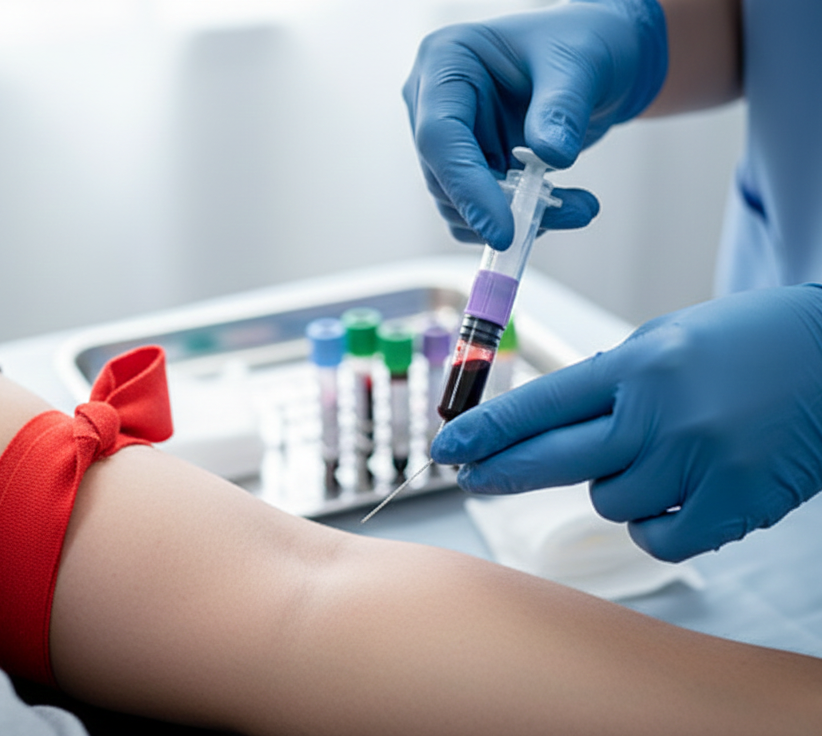
If you’ve booked a blood test and been told not to eat beforehand, you might be wondering, is fasting really necessary?
It’s a common question, especially if your appointment is early in the morning or part of a routine health check. The truth is, some blood tests require fasting, while others don’t, and knowing the difference can help you avoid delays, repeat tests, or inaccurate results.
In this guide, we explain when fasting is needed, why it matters, and how to prepare properly for your blood test.
What Does “Fasting Before a Blood Test” Mean?
Fasting means not eating or drinking anything except water for a set period before your test, usually between 8 and 12 hours.
During this time, you should avoid:
- Food (including snacks)
- Tea or coffee (even without sugar)
- Fruit juice or fizzy drinks
- Alcohol
You can and should drink water to stay hydrated.
Why Do Some Blood Tests Require Fasting?
Fasting helps ensure your results reflect your body’s natural baseline levels, rather than temporary changes caused by food or drink.
After eating, your blood temporarily shows higher levels of:
- Glucose (blood sugar)
- Cholesterol and triglycerides
- Certain nutrients and hormones
For tests that measure these markers, fasting is essential to ensure accurate diagnosis and clinical decision-making.
Which Blood Tests Require Fasting?
For the following tests commonly require fasting:
- Fasting Blood Glucose Test: Used to assess or diagnose diabetes and prediabetes. Eating beforehand can raise glucose levels.
- Lipid Profile (Cholesterol Test): Measures cholesterol and triglycerides. Fasting is particularly important for accurate triglyceride results.
- Iron Studies: Iron levels can fluctuate after meals, so fasting may be recommended.
- Certain Liver Function Tests: In some cases, fasting helps standardise results for comparison.
Which Blood Tests Do NOT Require Fasting?
Many common blood tests do not require fasting, including:
- Full Blood Count (FBC)
- Thyroid Function Tests (TFTs)
- Vitamin B12 and Vitamin D levels
- Kidney Function Tests
If you’re booking a private blood test in the UK, your clinic will usually confirm this in advance.
What Happens If You Don’t Fast?
If fasting is required and you eat beforehand:
- Your results may be skewed or unreliable
- You may need to reschedule or repeat the test
- Diagnosis or treatment could be delayed
For example, eating before a cholesterol test may raise triglyceride levels, leading to misleading results.
How to Prepare for a Fasting Blood Test
Preparing properly can make your appointment smooth and stress-free.
The Evening Before
- Eat a light, balanced meal
- Avoid fatty or sugary foods
- Do not drink alcohol
- Begin fasting at the time advised (often after your evening meal)
On the Day of Your Appointment
- Drink water only
- Avoid tea, coffee, and supplements
- Do not smoke before your test
- Take medications only if advised by your GP or clinician
Book a Morning Appointment
- Most clinics recommend morning slots, as fasting overnight is easier and more comfortable.
Can You Drink Water While Fasting?
Yes, water is encouraged.
It helps:
- Keep you hydrated
- Make veins easier to access during blood collection
- Reduce dizziness or discomfort
Avoid flavoured water or any other drinks.
Should You Take Medication While Fasting?
This depends on your prescription.
- Some medications should be taken as normal
- Others may need to be delayed
If you’re unsure, check with your GP, pharmacist, or private clinic before your appointment.
Common Questions About Fasting Blood Tests
- How long should I fast before a blood test?
Most fasting tests require 8–12 hours without food.
- Can I chew gum while fasting?
It’s best not to, as it may stimulate digestion or affect certain results.
- What if I accidentally eat before my test?
Let your clinic know. They may still proceed or advise rescheduling.
Book a Private Blood Test in London, UK
If you’re looking for a fast, reliable, and professional blood test service in London, choosing the right clinic makes all the difference. At Medical Room, patients receive expert-led care, clear guidance, and accurate results you can trust.