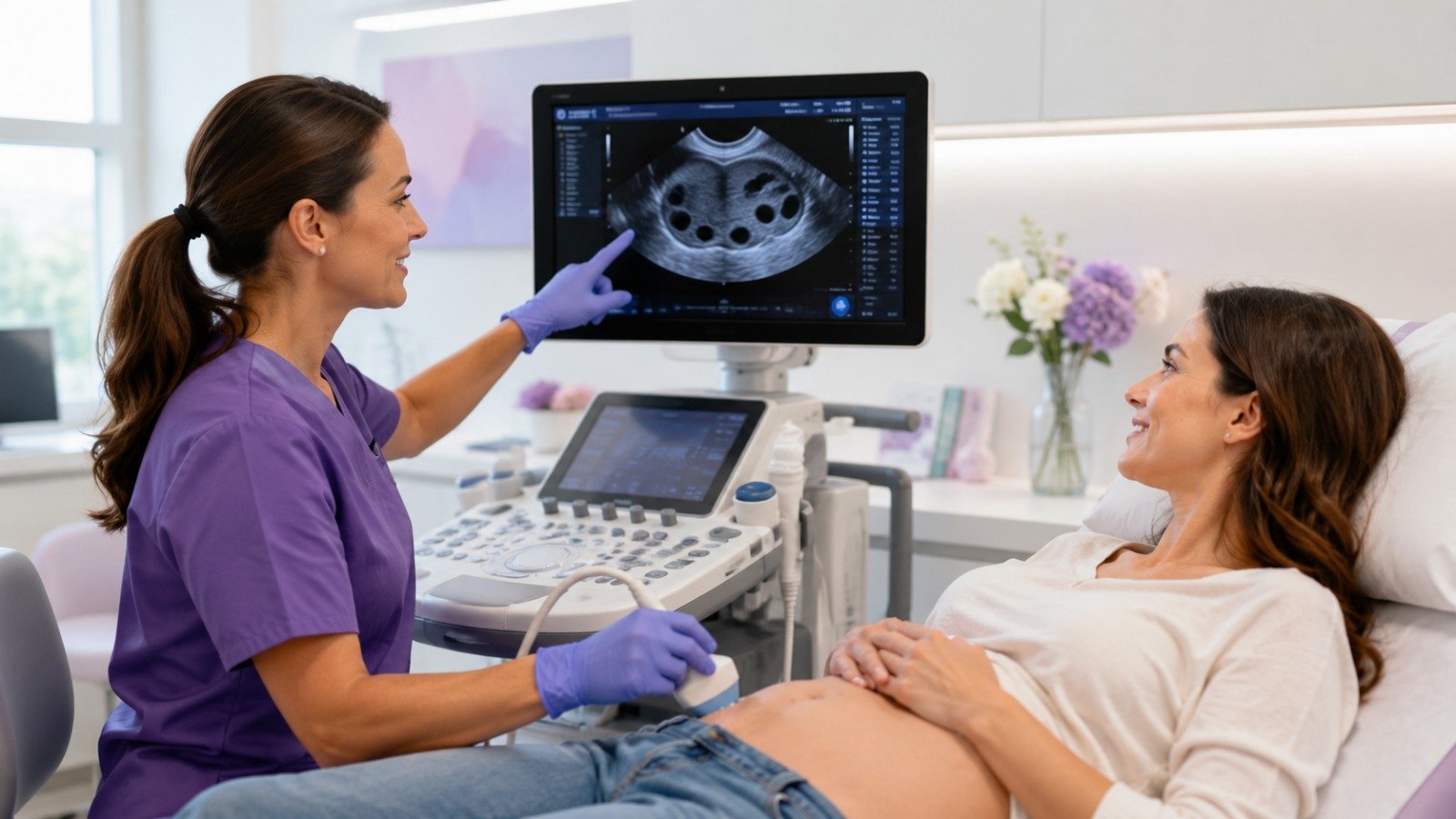
A 4D baby scan is an advanced form of ultrasound that allows you to see your baby in real time, showing movements such as stretching, yawning, and facial expressions. Unlike standard 2D scans used in routine NHS care, 4D scans are typically performed privately and are primarily intended for bonding and visualisation rather than medical diagnosis.
How 4D scans work
4D imaging uses the same ultrasound technology as standard scans but processes the data into a moving, three-dimensional image. The clarity of these images depends on how well sound waves can travel through fluid and reflect back from the baby’s features, particularly the face.
For the best images, there ideally needs to be a clear pocket of amniotic fluid in front of the baby’s face, with minimal obstruction.
Why image quality can vary
One of the most important things to understand is that 4D scans are highly dependent on factors outside of the clinic’s control, particularly the baby’s position at the time of the scan.
Image quality may be limited if:
- The baby is facing towards the mother’s spine (facing inwards)
- Hands, feet, or the umbilical cord are in front of the face
- The baby is positioned very close to the uterine wall
- There is limited amniotic fluid around the face
- The placenta is positioned at the front (anterior placenta)
These are all normal variations in pregnancy and can change from day to day but not always within the timeframe of a single appointment.
When is the best time for a 4D scan?
The optimal time for 4D imaging is generally between 24 and 28 weeks of pregnancy. At this stage:
- The baby has developed clear facial features
- There is usually enough fluid to allow good image quality
- The baby still has space to move freely
After around 30 weeks, space in the womb becomes more restricted. Babies tend to settle into more fixed positions, which increases the likelihood that their face may be obscured during the scan.
What if images are not clear?
While many scans produce excellent images, it is not always possible to obtain clear views during every appointment. Even under ideal conditions, positioning alone can limit what is visible.
Some clinics may offer a repeat scan if images are significantly limited, but it is important to understand that:
- A different outcome cannot be guaranteed
- The same positional limitations may still apply
Important to understand
- 4D scans are position dependent and outcomes can vary
- Image quality is influenced by natural factors, not just equipment or technique
- These scans are optional and non-diagnostic, designed primarily for bonding
Conclusion
4D baby scans can provide a unique and memorable opportunity to see your baby before birth, offering a more detailed and lifelike experience than standard ultrasound imaging. However, it’s important to understand that the quality of these images is influenced by natural factors particularly the baby’s position which are entirely outside of the clinic’s control.
While many scans result in clear and detailed images, this cannot be guaranteed in every case. Variations in positioning, gestational age, and surrounding conditions can all impact what can be visualised at the time of the appointment.
For the best possible experience, attending within the recommended timeframe and understanding these limitations in advance can help ensure expectations are aligned with what the scan can realistically provide.