
 Blood
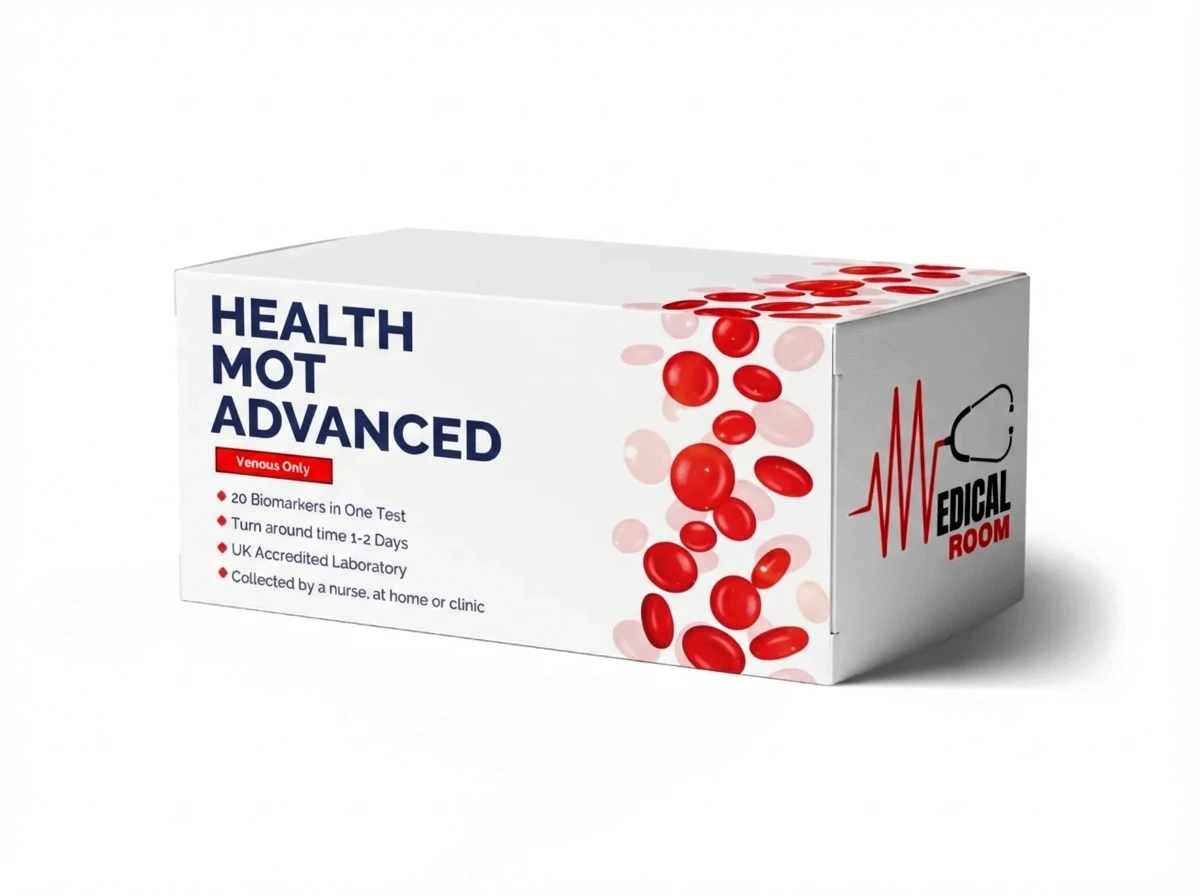
Our Health MOT – Advanced is a comprehensive assessment designed to give you a clear picture of your overall health and cardiovascular wellbeing. This package includes:
-
Blood tests to evaluate key health markers
-
QRISK score to estimate your risk of cardiovascular disease
-
ECG (electrocardiogram) to assess heart rhythm and electrical activity
All assessments are conducted by qualified healthcare professionals in a regulated clinical environment, with blood samples analysed by accredited laboratories. Results are explained clearly, providing professional insights and practical advice.
Benefits include:
-
Understanding your overall health and wellbeing
-
Assessment of cardiovascular risk
-
Early detection of potential health concerns
-
Expert interpretation of results
-
Peace of mind
Treatment time: Varies per individual (blood sampling typically 15–30 minutes; ECG included for the advanced option).
Blood Tests Included in the Health MOT
As part of the Health MOT assessment, a venous blood sample will be collected and sent to a UK accredited laboratory for analysis.
The Health MOT blood test uses the DL4L Biochemistry & Haematology Profile, which includes the following tests.
Haematology
a) Full Blood Count (FBC) – evaluates red blood cells, white blood cells and platelets. This may identify anaemia, infection or other blood-related abnormalities.
b) Erythrocyte Sedimentation Rate (ESR) – a non-specific marker that may indicate inflammation in the body.
Kidney (Renal) Function
a) Urea – a waste product filtered by the kidneys which helps indicate kidney function and hydration status.
b) Creatinine – a metabolic waste product used to assess kidney filtration function.
c) Estimated Glomerular Filtration Rate (eGFR) – a calculated estimate of kidney filtering capacity.
Liver Function
a) Bilirubin – a breakdown product of red blood cells which may indicate liver or bile duct problems.
b) Alkaline Phosphatase (ALP) – an enzyme associated with liver and bone metabolism.
c) Aspartate Aminotransferase (AST) – a liver enzyme that may increase with liver irritation or muscle damage.
d) Alanine Aminotransferase (ALT) – an enzyme used to assess liver cell health.
e) Gamma-Glutamyl Transferase (GGT) – an enzyme associated with liver and bile duct function.
f) Total Protein – measures overall protein levels in the blood.
g) Albumin – a major blood protein produced by the liver.
h) Globulin – a group of proteins involved in immune function.
Bone and Mineral Markers
a) Calcium – important for bone health and muscle function.
b) Phosphate – works with calcium to maintain bone health.
c) Magnesium – a mineral important for muscle, nerve and heart function.
Metabolic and Cardiovascular Markers
a) Glucose – a measure of blood sugar at the time of testing.
b) Triglycerides – a type of fat in the blood associated with metabolic and cardiovascular health.
c) Total Cholesterol – a measure of cholesterol in the blood.
Extended Lipid Profile
a) HDL Cholesterol – often referred to as “good cholesterol”.
b) LDL Cholesterol (calculated) – often referred to as “bad cholesterol”.
c) Non-HDL Cholesterol – a broader indicator of cholesterol associated with cardiovascular risk.
Take a proactive approach to your health with a thorough, clinician-led evaluation designed to support your long-term wellness.



Reviews
There are no reviews yet.